


Digital printer for anodised aluminium
The AnoJet printers print onto anodised aluminium with print areas ranging from 1110 × 750 mm to 2020 × 1190 mm. All models feature Multi-Drops technology, which prints the image into the aluminium up to 32 times per pore. This high precision makes it possible to render even the smallest typefaces.
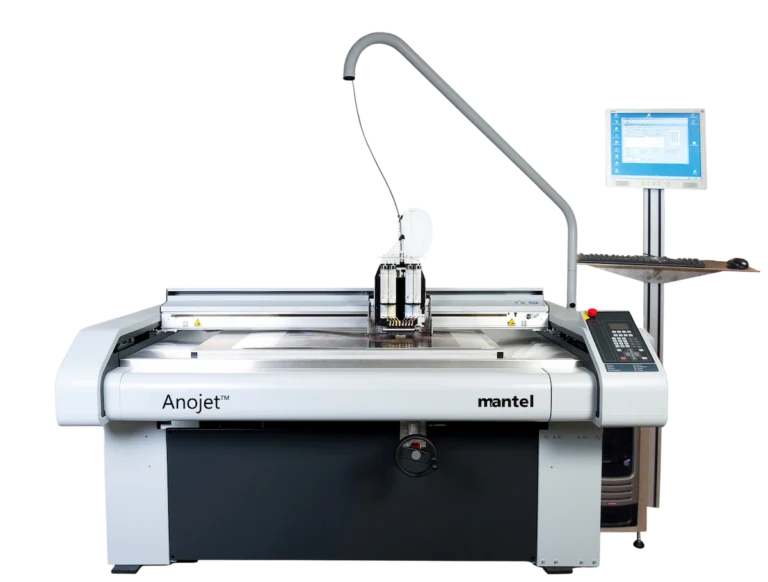
The AnoJet printers print onto anodised aluminium with print areas ranging from 1110 × 750 mm to 2020 × 1190 mm. All models feature Multi-Drops technology, which prints the image into the aluminium up to 32 times per pore. This high precision makes it possible to render even the smallest typefaces.
Anojet Aluminium Printers for every size
AnoJet M-800
- Print area 1110 × 750 mm
- Designed for standard formats, outdoor signage, nameplates and smaller print runs
AnoJet M-1200
- Print area 1110 × 1020 mm
- For businesses that regularly produce longer formats without needing additional floor space
AnoJet L-1200
- Print area 1605 × 1020 mm
- A larger print area for architectural signage, wayfinding systems and large-format industrial work.
AnoJet XL-1200
- Print area 2020 × 1190 mm
- For large-format applications that smaller printers cannot complete in a single pass.
Anojet printer technical details
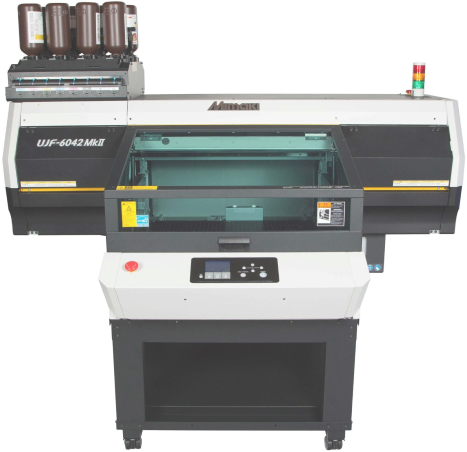
DataPrint M-1200

DataPrint M-1200

DataPrint M-1200
| M-800 | M-1200 | L-1200 | XL-1200 | |
|---|---|---|---|---|
| Max. print area | 1110×750 | 1110×1020 | 1605×1020 | 2020×1190 |
| Max. material thickness | 0.2 mm to 40 mm (expandable up to 80 mm) | |||
| Print heads | Epson Piezo Drop-on-Demand | |||
| Colours | CMYK | |||
| Resolution (dpi) | Up to 2880 x 2880 dpi / renders text as small as 4pt | |||
| Max. print speed | 1-2 m² per hour | |||
| Material fixation | Vacuum table | |||
| Print bed | Unheated (no material warping) | |||
| Dimensions LxWxH (mm) | 1630x1540x1200 | 2630x1940x1200 | 3070x1940x1200 | 3570x1940x1200 |
| Weight (kg) | 500 | 650 | 750 | 880 |
| User interface | LCD display, multilingual | |||
| Safety | Light barriers in the working area | |||
| Operating ambient temperature (with ink) | 20°C to 25°C | |||
| Storage temperature (without ink) | 0°C to 28°C (no sudden temperature fluctuations) | |||
| Operating ambient Humidity (%) | 45% to 65% | |||
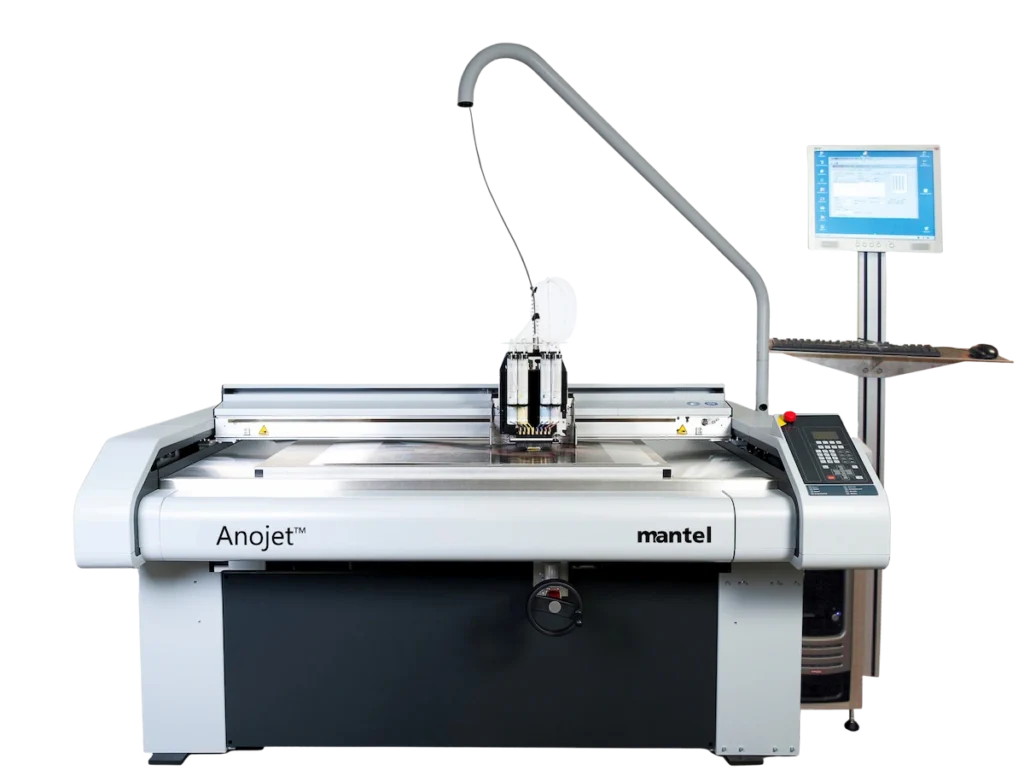
Highest quality aluminium printing with AnoJet
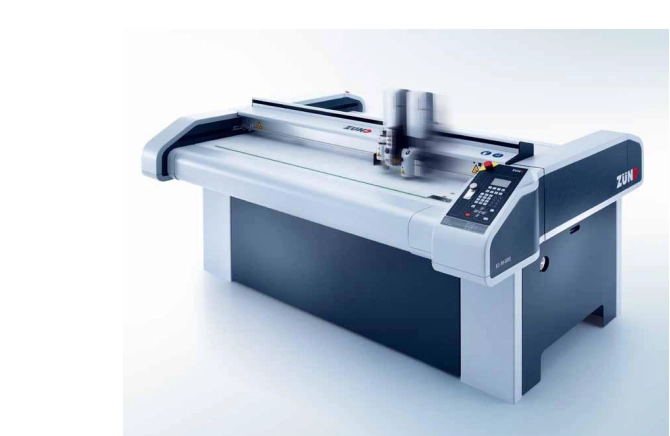
Zünd platform as the foundation
Every one of our AnoJet sub-anodising printers is built on a Zünd plotter with a solid steel frame. Zünd is the world’s leading manufacturer of cutting plotters. We have built our print systems on this mechanical platform for 25 years. Thanks to their high build quality, these plotters are still running in daily production after 25 years.
This platform choice improves print quality: high mass dampens vibration, so droplets land precisely and repeatably where they should. It is exactly this precision that makes it possible to print 32 droplets into exactly the same pore. Other printers manage no more than one or two droplets per pore.
Epson as our print head partner
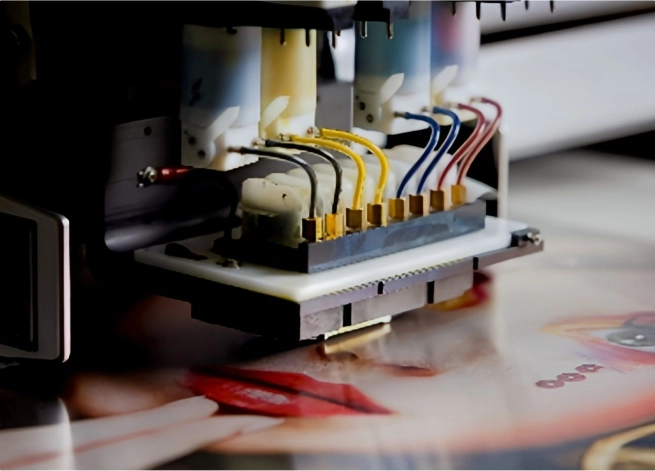
All AnoJet models use piezo drop-on-demand print heads from Epson. We are a direct partner and work closely with Epson. For our customers, this means specifically:
- Proven print head technology with high droplet accuracy
- 10 years of guaranteed spare parts from Epson per print head generation
- Upgrade kits: when a new print head generation is introduced, we offer retrofit packages including software, installation and a new print head, keeping existing machines technically up to date
We deliberately avoid making a blanket statement about print head lifespan, since it depends too heavily on usage, environmental conditions and maintenance discipline. What we do guarantee: spare parts remain available through Epson for 10 years, with service provided through our worldwide network.
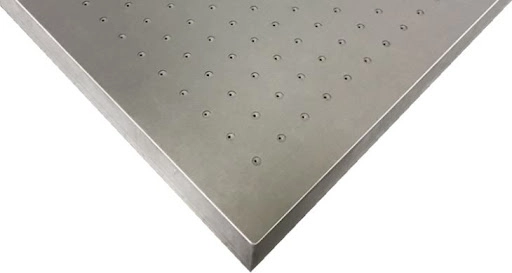
Vacuum table for precision
Every AnoJet is fitted with a vacuum table. This fixation system holds the aluminium sheet firmly on the table throughout the entire print process, which is essential for the high repeat accuracy of the Multi-Drops process. Even slightly warped or thin sheets are held reliably in place.
A deliberate decision against a heated print bed
Other manufacturers rely on heated print beds. We deliberately avoid this, because aluminium expands when heated, which leads to inaccuracies. If the material is printed while warm and then cools afterwards, it contracts. The result is distortion in the printed image and measurable dimensional deviations. Other manufacturers rely on heated print beds. We deliberately avoid this, because aluminium expands when heated, which leads to inaccuracies. If the material is printed while warm and then cools afterwards, it contracts. The result is distortion in the printed image and measurable dimensional deviations.
CMYK printing without pre-treatment
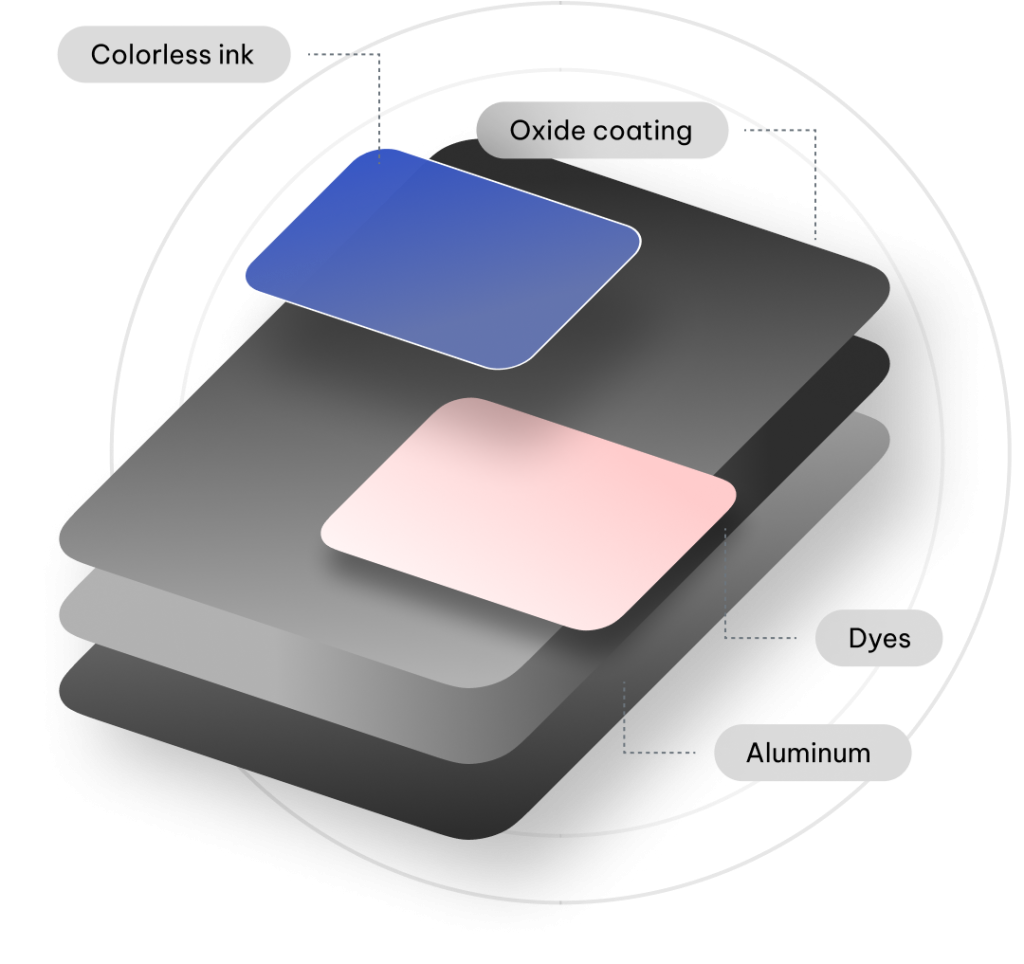
AnoJet prints in CMYK directly into the anodised pores, with no primer or other chemical pre-treatment. Here’s why that matters: an additional primer layer can vary in thickness, which reduces print precision. We print into the aluminium itself, not onto a protective layer on top of it.
Anojet printer last 3-5x Longer than others
An AnoJet is a machine built for 15 to 20 years of production use. This is made possible by three factors: the industrial Zünd platform with 20 to 30 years of spare parts availability, Epson print heads with 10 years of guaranteed spare parts, and our upgrade kits, which allow new print head generations to be integrated into existing machines.
By comparison, industrial inkjet printers from other manufacturers typically achieve 3 to 5 years of production use before spare parts shortages and a lack of service infrastructure make continued operation difficult.
Which model suits which application?
The choice between the M-800, M-1200, L-1200 and XL-1200 depends primarily on two factors: the largest format you regularly print, and the floor space available in your production facility.The choice between the M-800, M-1200, L-1200 and XL-1200 depends primarily on two factors: the largest format you regularly print, and the floor space available in your production facility.
M-800
for standard formats up to A1 and volume production of smaller signs
M-1200
when longer formats are needed but the footprint should stay the samewhen longer formats are needed but the footprint should stay the same
L-1200
for architectural signage, wayfinding systems and larger industrial orders
XL-1200
for those producing regularly at maximum formats and needing complete solutions rather than tiling
anojet aluminium printer FAQ
Can media with a thickness over 40 mm be printed?
In the standard configuration, AnoJet models print material thicknesses of up to 40 mm. An increase to up to 80 mm is possible, however. In the standard configuration, AnoJet models print material thicknesses of up to 40 mm. An increase to up to 80 mm is possible, however.
Why does the AnoJet print more slowly than other printers?
Because we print 32 droplets into the same pore instead of laying down a single layer on the surface. A UV-LED printer is faster in raw application speed, but produces a printed image that sits on the surface and is correspondingly vulnerable. The AnoJet’s speed of 1–2 m² per hour is the pace at which a printed image is created that withstands abrasion, chemicals and UV exposure for decades.Because we print 32 droplets into the same pore instead of laying down a single layer on the surface. A UV-LED printer is faster in raw application speed, but produces a printed image that sits on the surface and is correspondingly vulnerable. The AnoJet’s speed of 1–2 m² per hour is the pace at which a printed image is created that withstands abrasion, chemicals and UV exposure for decades.
How important is resolution in digital aluminium printing?
The nominal resolution of up to 1440 × 1440 dpi is sufficient for all practical applications. The AnoJet can render text as small as 4pt. The print heads can technically address considerably higher resolutions (up to 2880 × 2880 dpi), which is no longer distinguishable to the eye. In practice, what matters more than the dpi figure is the durability of the print result – and that is exactly where the strength of the Multi-Drops process lies.The nominal resolution of up to 1440 × 1440 dpi is sufficient for all practical applications. The AnoJet can render text as small as 4pt. The print heads can technically address considerably higher resolutions (up to 2880 × 2880 dpi), which is no longer distinguishable to the eye. In practice, what matters more than the dpi figure is the durability of the print result – and that is exactly where the strength of the Multi-Drops process lies.
How high is the power consumption?
Because we do not use a heated print bed, power consumption is considerably lower than comparable inkjet printers with bed heating.
What happens if the print head is discontinued by the manufacturer?
We develop an upgrade kit, including software, installation and a new print head, for every new print head generation. This keeps existing machines fully operational across print head lifecycles. The mechanics stay the same; the print technology is updated.We develop an upgrade kit, including software, installation and a new print head, for every new print head generation. This keeps existing machines fully operational across print head lifecycles. The mechanics stay the same; the print technology is updated.